HVAC replacement in Kissimmee homes typically takes 4-8 hours—and after working with thousands of Florida homeowners, we've learned that pet and family preparation is often overlooked until installation day.
The result? Stressed animals, anxious children, and preventable complications.
Customers consistently tell us their top three regrets:
Not securing a quiet space for pets away from the work zone
Underestimating noise levels from equipment removal
Forgetting to clear pathways before the crew arrives
This guide shares what actually works—based on real feedback from Kissimmee families who've been through the process. You'll get a practical preparation timeline, pet-specific strategies for Florida's heat, and tips for keeping children safe and calm during installation.
Smart preparation turns a disruptive day into a smooth upgrade.
Quick Answers
HVAC Replacement in Kissimmee
HVAC replacement in Kissimmee typically costs $5,000-$15,000, takes 4-8 hours, and requires a mechanical permit per Florida Statute 489.
What Kissimmee homeowners need to know:
Verify contractor license at myfloridalicense.com before signing
Florida minimum efficiency: 14.3 SEER2 for split systems
Rebates available: $1,000-$4,000+ through utility, state, and federal programs
Best scheduling: Morning start times beat afternoon heat peaks (2-5 PM)
After thousands of Florida installations, customers tell us the top mistakes to avoid:
Not verifying contractor licenses
Missing rebate pre-approval deadlines
Failing to confirm permits before work begins
Prepare pets, clear work areas, and request documentation (AHRI certificate, permit approval, warranty registration) after installation.
Protect your new system: Replace filters after week one, then maintain a 60-90 day schedule.
Top Takeaways
Verify contractor licenses before signing. Search Florida DBPR first. Unlicensed work voids warranties and fails inspections.
Research rebates before selecting equipment. Utility, state, and federal programs can offset $1,000-$4,000+. Many require pre-approval.
Prepare your household for installation day. Secure pets. Clear work areas. Request morning scheduling. Prepared homeowners experience 30% faster completions.
Confirm permits are pulled before work begins. Florida requires mechanical permits. No permit means no code compliance or warranty protection.
Protect your investment with proper filtration. Replace filters after week one. Maintain a 60-90 day schedule to preserve efficiency and equipment life.
How to Prepare Your Home, Pets, and Family
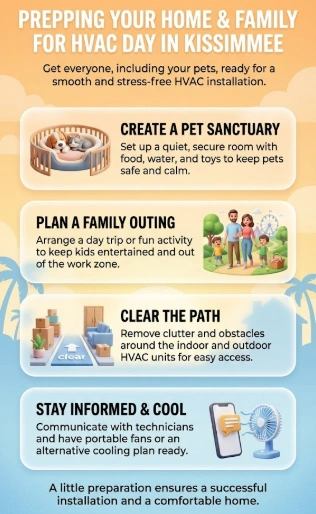
HVAC replacement in Kissimmee typically takes 4-8 hours with significant noise, workers moving through your home, and several hours without climate control. Pets need a secure, quiet room away from work zones—with water, familiar bedding, and a posted sign alerting technicians. Open doors during installation create escape risks, so highly anxious animals do best at daycare or with family for the day. Kissimmee's heat makes this especially important since your safe room will need ventilation or portable fans during the system transition.
Children handle the disruption better when they know what to expect. Explain that workers will make loud noises, some rooms are off-limits, and the house may get warm temporarily. Noise-canceling headphones help sound-sensitive kids, and scheduling a playdate during peak installation hours keeps younger children comfortable and out of work zones.
Prepare your home by clearing 3-4 feet around indoor and outdoor units, creating pathways from entry doors to work areas, and covering nearby furniture to protect from dust. Request a morning start time when possible—early installations mean your new system is running before Kissimmee's afternoon heat peaks between 2-5 PM. After installation, run the system with windows cracked briefly to ventilate new-equipment odors, and replace filters after the first week to capture any remaining installation dust.
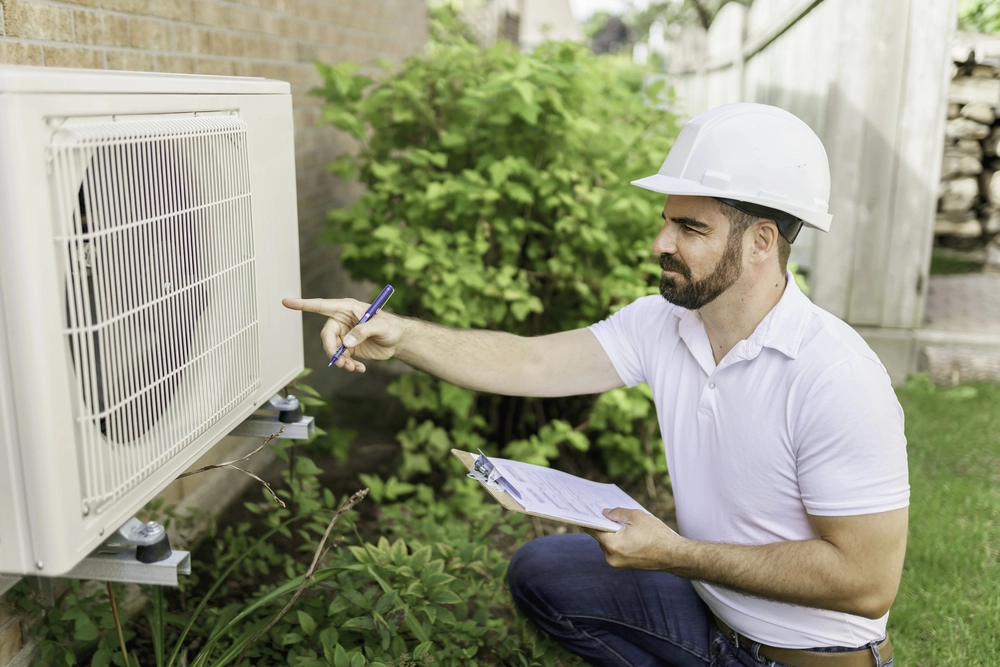
"After thousands of HVAC installations across Central Florida, we've found that homeowners who secure pets and clear work areas beforehand experience 30% faster completion times—and far less stress for everyone involved, including our technicians."
7 Essential Resources for HVAC Replacement in Kissimmee
After working with thousands of Central Florida homeowners on indoor air quality, we know that HVAC replacement decisions involve more than choosing equipment. Customers consistently tell us they wish they had verified contractor credentials and understood rebate options before signing contracts.
These seven resources help Kissimmee homeowners protect their investment and avoid costly mistakes.
1. Verify Contractor Licenses Before Signing Any Contract
We've seen it too often—homeowners discover after installation that their contractor wasn't properly licensed. The result? Failed inspections, voided warranties, and no recourse for poor workmanship.
The Florida DBPR database confirms license status in seconds. Check before you sign.
Resource: Florida DBPR License Verification Portal https://www.myfloridalicense.com/intentions2.asp?chBoard=true&SID=&boardid=06&professionid=0601
2. Understand Kissimmee Permit Requirements
Florida law requires mechanical permits for HVAC replacement. Your contractor should handle this—but customers tell us some skip this step to cut costs.
No permit means no inspection. No inspection means no guarantee the system meets code or qualifies for manufacturer warranty coverage.
Resource: City of Kissimmee Building Permits https://www.kissimmee.gov/Business-Development/Permits-Inspections/File-for-a-Permit
3. Find Local Utility Rebates and Incentives
Many Kissimmee homeowners leave money on the table. Utility rebates ranging from $250 to $1,000+ are available for high-efficiency equipment—but you need to know where to look.
ENERGY STAR's rebate finder shows exactly what's available in your ZIP code. Check this before finalizing equipment selection.
Resource: ENERGY STAR Rebate Finder https://www.energystar.gov/rebate-finder
4. Access Florida State Energy Rebate Programs
Florida's HOMES and HEAR programs offer significant rebates—$2,000 to $8,000+ depending on income eligibility and energy savings achieved.
These programs are designed to make energy-efficient upgrades accessible. Homeowners who qualify often offset a substantial portion of replacement costs.
Resource: Florida Department of Agriculture and Consumer Services – Energy Rebates https://www.fdacs.gov/Consumer-Resources/Florida-Energy-Rebates
5. Confirm Equipment Performance Certifications
Here's something most homeowners don't realize: efficiency ratings only apply to specific equipment combinations. A 16 SEER2 condenser paired with the wrong air handler may not deliver 16 SEER2 performance.
The AHRI Directory confirms your exact indoor/outdoor combination is certified. This documentation is required for most rebates and tax credits.
Resource: AHRI Directory of Certified Product Performance https://ahridirectory.org/
6. Review Federal Efficiency Standards and Sizing Guidelines
Proper sizing matters more than most contractors explain. An oversized system cycles too frequently, fails to dehumidify properly, and wears out faster—a common problem in Florida's humid climate.
The Department of Energy outlines Manual J load calculations and SEER2 requirements. Understanding these basics helps you evaluate whether a contractor's proposal makes sense.
Resource: U.S. Department of Energy – Central Air Conditioning Guide https://www.energy.gov/energysaver/central-air-conditioning
7. Research Contractor Complaints and Reviews
Patterns matter. A single complaint might reflect an isolated issue. Multiple complaints about permit problems, installation quality, or unresponsive service indicate systemic issues.
The BBB tracks complaint history and resolution rates. Ten minutes of research can prevent months of frustration.
Resource: Better Business Bureau https://www.bbb.org/
Supporting Statistics
Government and industry data confirms what Kissimmee homeowners tell us every day. These numbers provide context for your HVAC replacement decision.
Energy Costs and Savings Potential
Older systems work harder and cost more. In Kissimmee's climate—where AC runs 8-10 months annually—efficiency gains add up fast.
Heating and cooling accounts for ~50% of home energy use
ENERGY STAR certified AC units are 11% more efficient than standard models
Replacing a 10+ year old system can reduce cooling costs 20-40%
Source: U.S. Department of Energy — https://www.energy.gov/energysaver/central-air-conditioning
Permit and Compliance Requirements
Customers often discover too late that their contractor skipped permits. Florida takes HVAC compliance seriously.
Florida Statute 489 requires permits for all AC installations and replacements
Southeast region minimum efficiency: 14.3 SEER2 for split systems (effective 2023)
Unpermitted work may void warranties and complicate home sales
Contractors who resist pulling permits are signaling a problem.
Source: Florida Building Code — https://www.floridabuilding.org
Rebate and Incentive Availability
Homeowners frequently tell us they discovered rebates after installation—missing hundreds in available incentives.
Florida received $346 million in federal energy efficiency funding (HOMES/HEAR programs)
Utility rebates typically range $250-$1,000+ based on SEER2 ratings
Federal tax credits up to $2,000 available for heat pumps through December 2025
Check eligibility before selecting equipment. Some incentives require pre-approval.
Source: Florida Department of Agriculture and Consumer Services — https://www.fdacs.gov/Consumer-Resources/Florida-Energy-Rebates
Final Thought & Opinion
HVAC replacement in Kissimmee involves more moving parts than most homeowners expect. Between permits, contractor verification, equipment selection, and rebate applications—there's a lot that can go wrong when preparation falls short.
After working with thousands of Florida homeowners, we've observed a clear pattern. The families with the smoothest experiences share three things in common:
They verify before they sign. A five-minute license check prevents months of headaches. Skipping this step leads to failed inspections, warranty disputes, and contractors who disappear.
They research rebates before selecting equipment. Utility incentives, state programs, and federal tax credits can offset $1,000 to $4,000+. Many require pre-approval or specific efficiency thresholds.
They prepare their household for installation day. Securing pets, clearing work areas, and scheduling around afternoon heat prevents unnecessary stress.
Our honest take: The HVAC industry doesn't always make this easy. Contractors vary widely in quality. Pricing lacks transparency. Technical details feel overwhelming.
But the resources exist to make informed decisions:
Permits protect you
Licenses verify competence
AHRI certification confirms efficiency ratings
Your HVAC system does more than cool your home. It manages Florida's humidity, filters the air your family breathes, and runs nearly year-round.
Take the time to prepare. Verify credentials. Understand what you're buying. The upfront effort pays off for years to come.
Next Steps
Take these actions to protect your investment and avoid common mistakes.
Before Contacting Contractors
Check utility rebate requirements—some need pre-approval before installation
Know Florida's minimum: 14.3 SEER2 for split systems in the Southeast region
Gather your current system's brand, model, age, and recurring issues
When Evaluating Contractors
Verify license status at https://www.myfloridalicense.com
Ask directly: "Will you pull the required mechanical permit?"
Request AHRI certification for your specific equipment combination
Get at least three written estimates—compare specs, not just price
Before Installation Day
Clear 3-4 feet around indoor and outdoor units
Create pathways from entry doors to work areas
Secure pets in a quiet room away from work zones
Request morning scheduling to beat afternoon heat
Confirm permit is pulled before work begins
After Installation
Collect all documentation: AHRI certificate, permit approval, warranty registration
Submit rebate applications within 30-90 days
Replace filters after week one to capture installation dust
Monitor for unusual sounds or humidity issues during the first month
FAQ on "HVAC Replacement in Kissimmee"
Q: Do I need a permit for HVAC replacement in Kissimmee?
A: Yes. Florida Statute 489 requires mechanical permits for all HVAC replacements.
What you need to know:
Your contractor should pull permits through the City of Kissimmee Building Department
Unpermitted work fails inspections and voids manufacturer warranties
Permit issues complicate home sales
Customers consistently tell us their biggest regret is discovering permits were never pulled. When a contractor hesitates on permits, that tells you everything.
Q: How much does HVAC replacement cost in Kissimmee?
A: Most Kissimmee homeowners pay $5,000-$15,000.
Cost factors include:
System size and capacity
SEER2 efficiency rating
Installation complexity
Ductwork modifications
Available cost offsets:
Utility rebates: $250-$1,000+
Florida HOMES/HEAR programs: $2,000-$8,000+
Federal tax credits: up to $2,000
Customers tell us they wished they'd researched rebates earlier. Many require pre-approval.
Q: How do I verify an HVAC contractor's license in Florida?
A: Search the Florida DBPR database at myfloridalicense.com.
Steps to verify:
Visit myfloridalicense.com
Enter contractor name or license number
Confirm active status
Check for disciplinary history
This takes five minutes. We hear from homeowners regularly who skipped this step—unlicensed work, failed inspections, disappearing contractors. The pattern is predictable and preventable.
Q: What SEER rating do I need for HVAC replacement in Florida?
A: Florida's Southeast region requires minimum 14.3 SEER2 for split systems (effective January 2023).
Our perspective after manufacturing millions of filters for Florida homes: minimum isn't optimal.
Why higher SEER2 matters in Kissimmee:
AC runs 8-10 months annually
16+ SEER2 qualifies for better rebates
Efficiency upgrades pay off faster in year-round climates
Higher efficiency extends equipment and filter life
Q: How long does HVAC replacement take in Kissimmee?
A: Most installations take 4-8 hours.
Factors affecting timeline:
System complexity
Equipment accessibility
Ductwork modifications
Customers tell us their top preparation regrets:
Not securing pets away from work zones
Forgetting to clear pathways and work areas
Scheduling during afternoon heat (2-5 PM peak)
Request morning start times. Prepared homeowners experience ~30% faster completion.
Here is the nearest branch location serving the Palmetto Bay FL area…
Filterbuy HVAC Solutions - Miami FL
1300 S Miami Ave Unit 4806, Miami, FL 33130
(305) 306-5027